✉
deandan@doitscm.com
🕒
Monday – Friday, 9:00 AM – 6:00 PM (GMT)
Internal residual stress is an inevitable hidden defect during metal casting production.
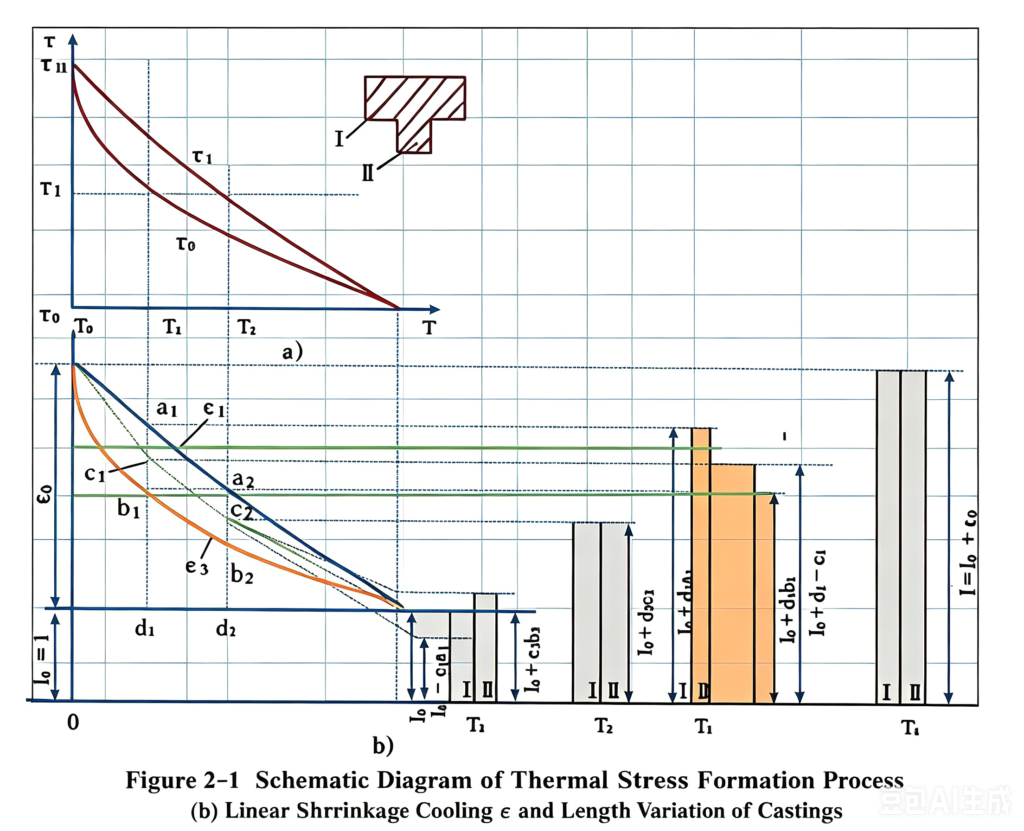
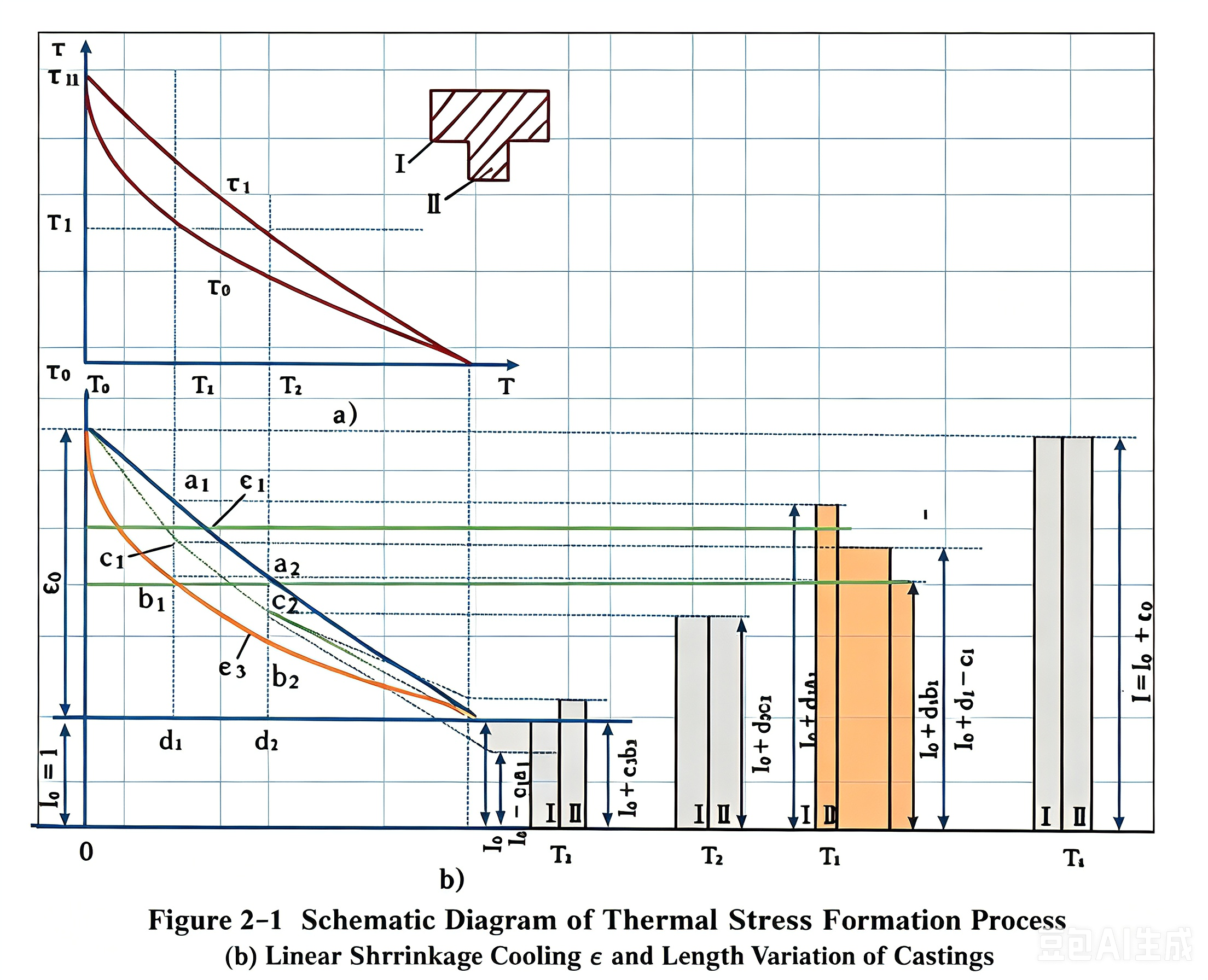
Uneven cooling speed, inconsistent wall thickness and uneven mold restraint will
generate huge residual stress inside castings. Without proper stress relief treatment,
finished castings will warp, crack or suffer dimensional deformation during machining,
assembly and long-term storage, directly leading to high scrap rates and unstable
product precision. This article systematically sorts out mainstream industrial stress
elimination processes, from offline heat treatment to online casting process
optimization, to help manufacturers fundamentally control residual stress.
1. Thermal Stress Relief Annealing (Most Widely Used Standard Process)
Annealing is the most reliable way to eliminate casting residual stress, suitable for
steel, aluminum alloy, iron and copper castings. The core principle is to heat castings
to a specific temperature below the material recrystallization point, keep constant
temperature for a long time, then cool down slowly to release internal elastic strain
energy.
For gray iron and ductile iron castings: the standard holding temperature ranges from
500℃ to 600℃. Large thick-walled castings need 2–4 hours of heat preservation to
ensure uniform internal temperature. Slow furnace cooling below 200℃ can avoid
new secondary stress from rapid temperature drop.
For aluminum alloy die castings and sand castings: low-temperature stress relief
annealing at 200–300℃ for 1–2 hours can remove casting and machining stress
without damaging material hardness and surface finish.
This process can eliminate over 85% of residual stress, and is mandatory for
precision casting parts used in automotive, hydraulic and aerospace equipment.
2. Natural Aging & Artificial Aging (Low-Cost Auxiliary Stress Relief)
Natural aging means placing finished castings in a constant-temperature workshop
for several weeks to several months. Under natural temperature fluctuation, internal
stress is slowly released with slight material creep. Its advantages are low cost and
no equipment investment, but the cycle is extremely long and cannot meet mass
production delivery requirements.
Artificial aging (vibration aging) is a high-efficiency alternative to natural aging.
Professional vibration aging equipment transmits periodic mechanical vibration to castings for 20–60 minutes. Micro-plastic deformation occurs at stress concentration
areas, which balances internal stress distribution. Vibration aging saves 90% time
compared with natural aging, and costs far less than annealing furnaces. It is widely
used for medium and large structural steel castings that are inconvenient to put into
heating furnaces.
3. Front-End Casting Process Optimization (Prevent Stress from Source)
Stress elimination should not only rely on post-processing; reasonable casting design
and molding processes can greatly reduce residual stress generation at the source.
First, optimize casting wall thickness design: avoid abrupt thickness changes, use
smooth fillet transitions instead of sharp right-angle corners to reduce cooling speed
differences between thick and thin sections. Second, control cooling rate: slow down
the cooling speed of thick hot spots by setting chills or adjusting sand mold thermal
conductivity, to shrink the temperature difference inside the casting during
solidification.
In addition, reasonable gating and riser layout can realize sequential solidification,
lower the thermal gradient of castings, and effectively cut the residual stress caused
by uneven solidification shrinkage.
4. Stress Control After Machining
Cutting and grinding will introduce new machining residual stress on the casting
surface. For high-precision parts, a secondary low-temperature aging process is
required after rough machining: remove the stress generated by cutting before finish
machining, to guarantee stable dimensional tolerance after long-term use.
Conclusion
The treatment of casting internal residual stress adopts a combined logic of
“prevention first, post-treatment supplement”. Process optimization in casting design
can reduce stress source; vibration aging is suitable for mass low-cost production;
stress relief annealing is the ultimate solution for high-precision castings. Factories
can select matching stress elimination schemes according to material, part precision
requirement and production cycle, to fundamentally solve casting deformation and
cracking failures caused by residual stress.